For centuries, fire has been part of life in Ottery St Mary on November 5th.
What began long ago as part of a wider West Country tradition has, in Ottery, become something unmistakably its own: a night of barrels, bonfire, memory and community, still carried through the streets today.

Origins Lost in Time
What survives in Ottery is not just a bonfire night custom, but a tradition still carried through the streets today.
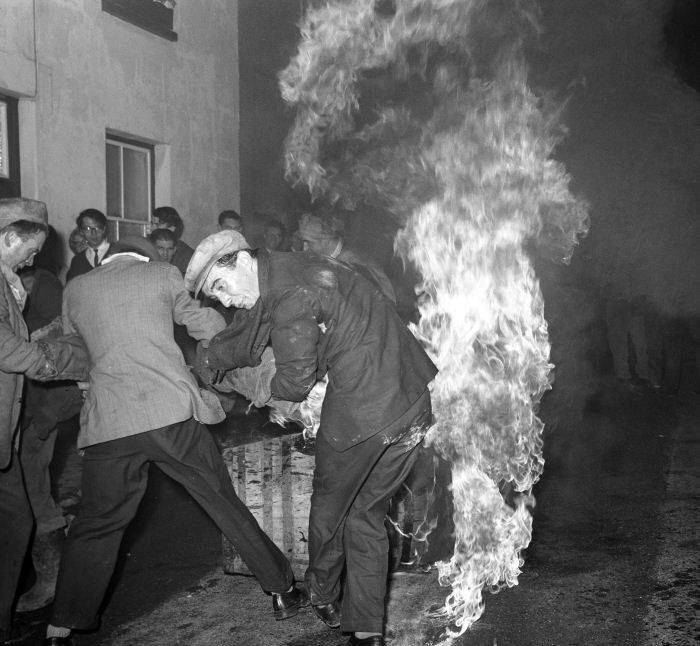
The Tar Barrels tradition is centuries old, though its exact origins are unknown. Like many old customs, it has gathered different explanations over time. Some believe it grew out of the celebrations after the Gunpowder Plot of 1605. Others have suggested more practical beginnings, from fumigating cottages to warning of danger along the coast.
What is certain is that fire has long played a part in West Country life. Torchlight processions, bonfires and burning barrels were once seen in many towns and villages across the region. Over time, most of those customs disappeared. In Ottery St Mary, one survived … and became something truly distinctive.

November 5th in Ottery
Tar Barrels takes place on November 5th each year, unless the date falls on a Sunday. The day itself is deeply tied to the wider history of bonfires and November observance, but in Ottery it has grown into something that belongs to the town in its own right.
The evening begins in the late afternoon with the children’s barrels, before moving through smaller and medium barrels as darkness falls. Later come the women’s, men’s and intermediate men’s barrels, before the final barrel – the Gurt Big Un – is carried at midnight. Twenty seven barrels are carried across the evening.
From Rolling to Carrying
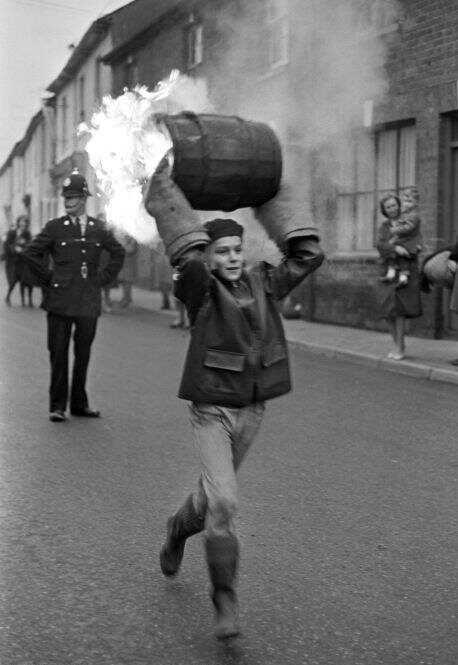
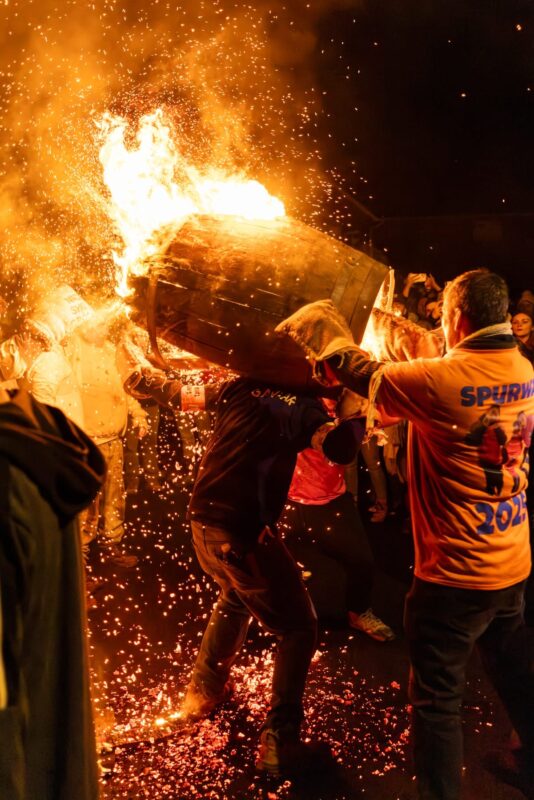
Ottery was not always unique in burning barrels, but it became unique in the way it did so. Somewhere along the line, rolling barrels through the streets gave way to carrying full sized, flaming tar barrels on the shoulder.
That change helped shape the tradition as it is known today. What survives in Ottery is not just a bonfire night custom, but a dramatic and highly unusual act of endurance, nerve and local pride. It is now the best known example of its kind, and the only place in the country where full sized lit tar barrels are still carried in this way.
video : kylebakerphotography.com
A Tradition Passed Through Generations
The fire may be what first catches the eye, but the real story is in the people who carry it on.
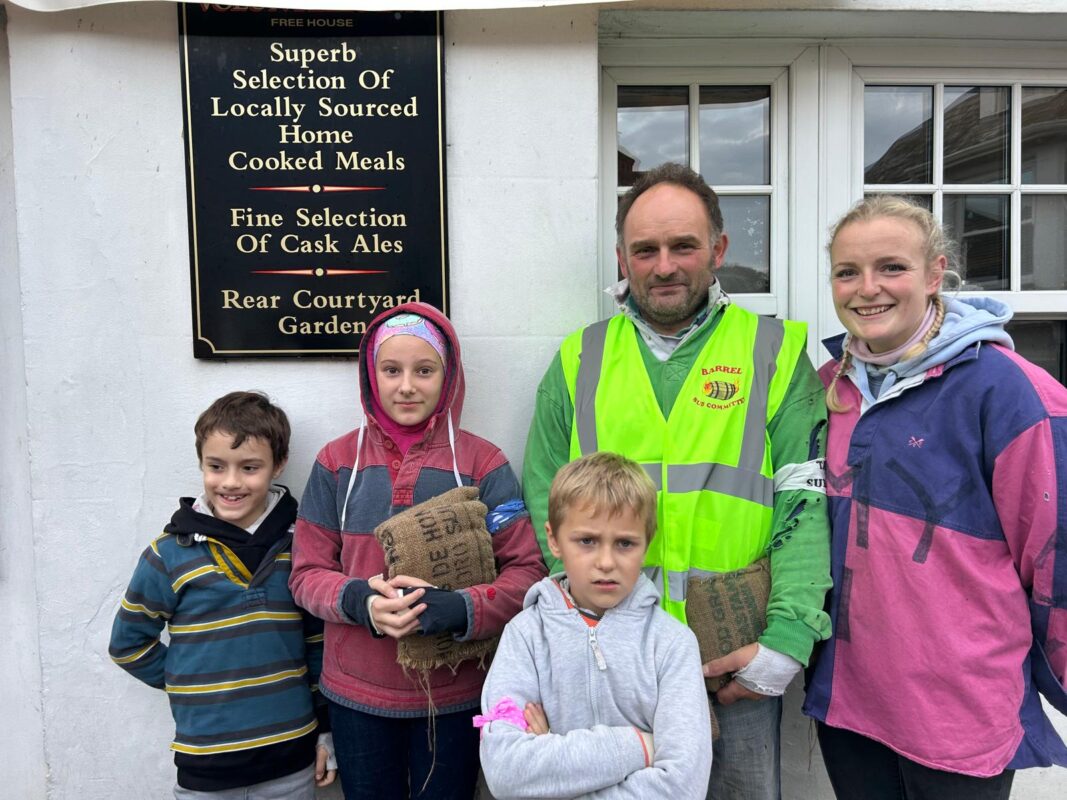
Tar Barrels has long been bound up with family, community and continuity. It has been passed through generations of Ottery families and maintained by local knowledge, commitment and pride.
For many people, that is what gives the night its meaning. The fire may be what first catches the eye, but the real story is in the people who carry it, organise it, support it and pass it on. It is not simply a spectacle put on for others. It is part of the identity of the town.
Still Carried Forward
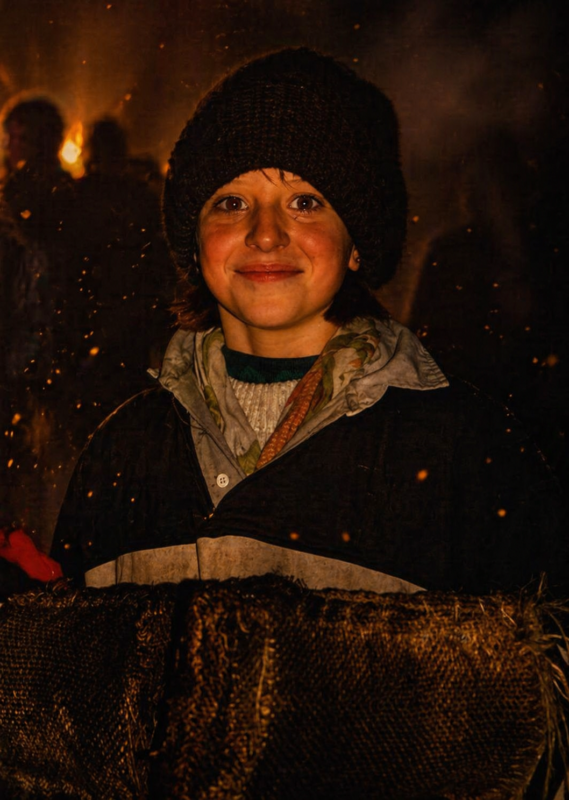
What makes Tar Barrels so remarkable is not simply its age, but the fact that it still lives. It has survived where many other local customs have faded, because each generation has chosen to carry it on.
That is why it still has such force. It is not recreated as history. It is still part of Ottery St Mary – carried through the streets, year after year, by the people who call it their own.
Tar Barrels has survived where many other local customs have faded, because each generation has chosen to carry it forward.
The Bonfire
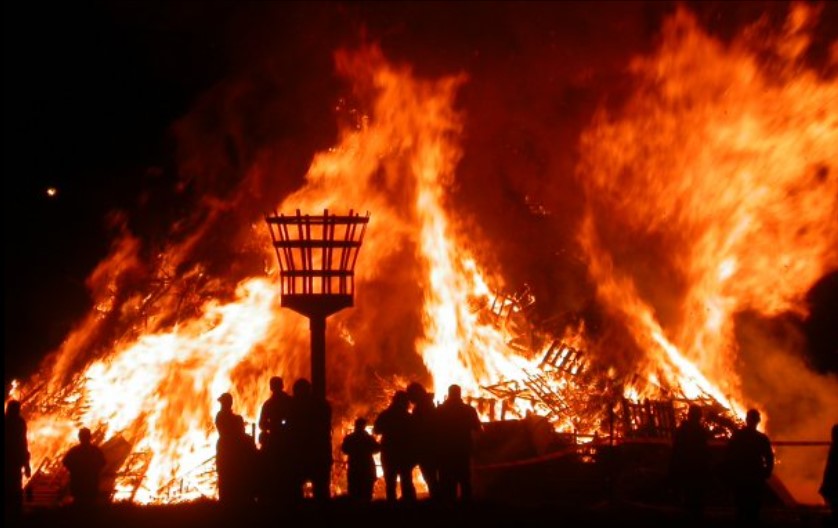
The bonfire is an important part of Ottery’s annual Carnival and Tar Barrels celebrations. Over the years it has stood in different places, including near the town monument on the Flexton. In more recent times, St Saviour’s Meadow has become its established home.
In the weeks leading up to Carnival, material is gathered from across the community to build it. The completed structure is a major part of the evening, and one of its most memorable sights.