
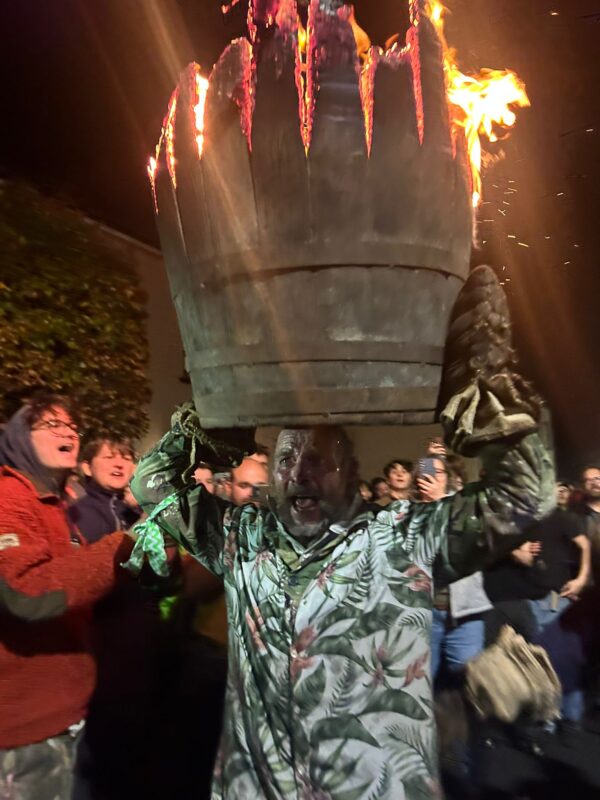
Darrin Abbott

Veteran Roller, Committee member and barrel marshal.

Q. How long have you been involved with Tar Barrels?

A. “I have been involved with the Tar barrels for well over 50 years.”

Q. What does the event mean to you personally?

A. “Ottery Tar Barrels is our unique community driven tradition with the town and families maintaining the right to carry the barrels, preserve the opportunity for future rollers and to also remember those who have rolled. Participating in such a cherished and beloved tradition has been part of my family’s history and heritage for over 5 generations. It’s in the blood!”

Q. Do you remember your first tar barrels night?

A. “My earliest recollections are from back in the early 1970’s aged 5 or 6, watching the men’s barrels in the square from a first floor window and wanting to be down in the crowd taking part.”

Q. Why do you think it’s so important to keep the tradition going?

A. “Preserving our local traditions and heritage is vital to provide a living history of our town, the Ottery community and future generations of family. In an ever changing world, Tar Barrels in Ottery on bonfire night was, is and will be a constant  for friends, family and the townsfolk of Ottery.”

Q. What makes it special compared to other events?

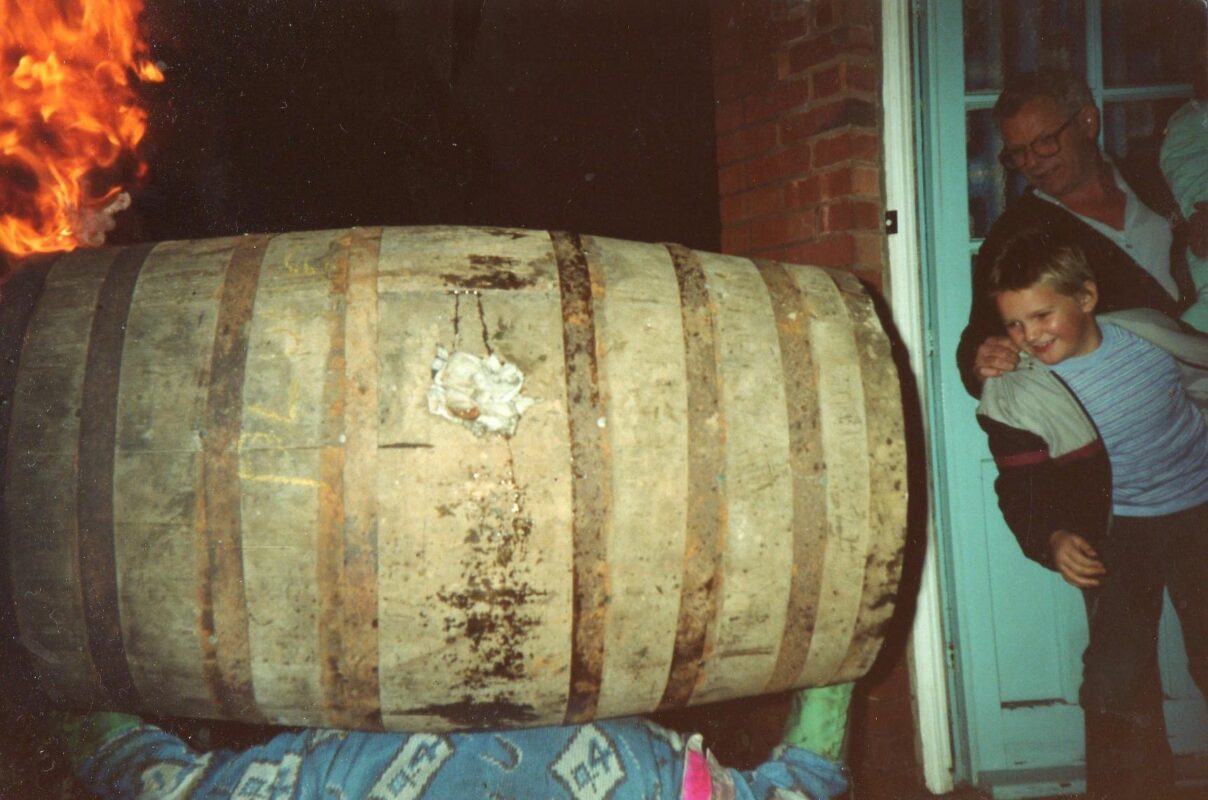
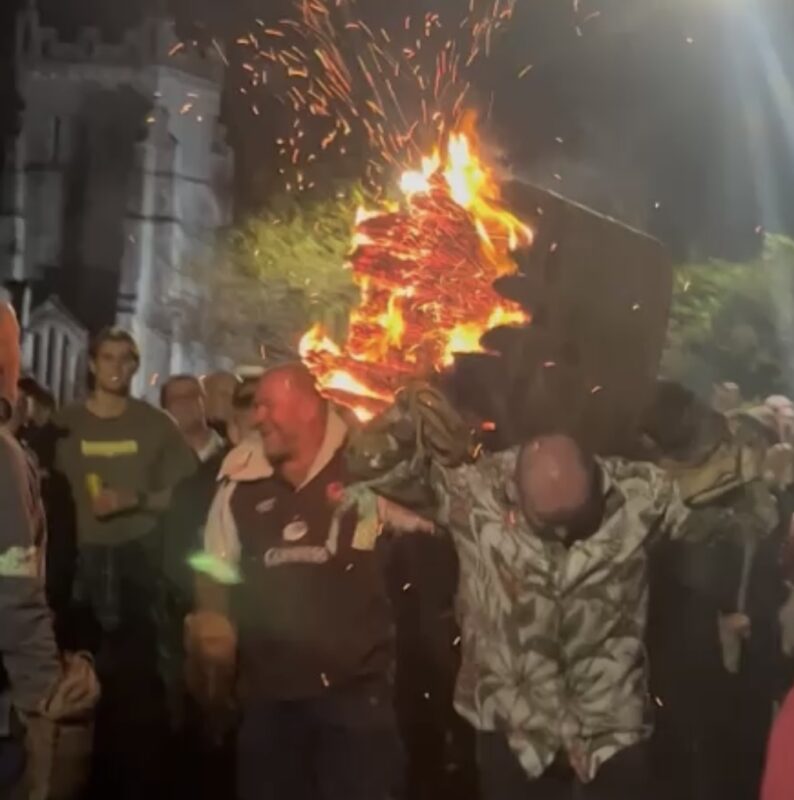
A. “Whether a Roller, a Barrel Marshall or spectator, there is no other public event that provides such an up close celebration on the 5th November. The intensity of a flaming barrel passing by at head height in a crowded street, the hot blast of flame and smoke on a cold November evening is truly a unique and unforgettable experience. With the construction of the bonfire every year the anticipation starts to build within Ottery, with the year’s planning taking shape around the town for all to see. It is a feeling that residents and Rollers look forward to whether young or old.”

Q. How would you describe it to someone who has never been?

A. “Ottery Tar Barrels is very well organised with hundreds of volunteers, emergency services and local community groups working behind the scenes on the night to make our event as safe as possible. First time visitors can initially feel apprehensive standing in a dense crush of people on a narrow street with a 60kg flaming barrel moving towards them, though by the end of the night they are old hands with tales of daring do! Come prepared. Wear old clothes, stout shoes,  bring a sense of humour and cash to keep Ottery rolling.”

Q. What would it mean to you if it didn’t continue in the future?

A. “I cannot imagine such a thing. It has been part of Ottery for hundreds of years  Why stop?”

Mike Cole

Catering Concessions Manager

Q. How long have you been involved with Tar Barrels?

A. “Since 2019”

Q. What is your role?

A. “The formal title is Catering Concessions Manager. I organise all the street food vendors for the 5th. In the months leading up to barrel day, I’m busy applying for trading consent, booking in traders and carrying out the relevant compliance checks. On the actual day, it’s a lot of running around town making sure the traders are where they should be and ready to go for the road closure – essentially meeting a load of great people and have some great chats along the way!”

Q. What does it mean to you personally?

A. “For me it’s the cultural heritage. I’m a big history fan and witnessing a unique tradition that stretches back hundreds of years is just an absolute joy.”

Q. Do you remember your first Tar Barrels night?

A. “The year my wife and I moved to Ottery St Mary. I had been many times before, but living in Ottery and seeing the whole day unfold is the best.

The random booms of the cannons in the early hours that lead the way for the gradual build up of activity and palpable sense of anticipation. By the time the kids barrels are done it’s in full swing, day turns to night illuminated by the lights of the food stalls, fairground and bonfire.

I remember and enjoy watching out for the tell tale signs of when and where a barrel is about to start, Stewards turn up but still some time passes. Rollers start to appear looking busy marching here and there, a quick stop to chat to a fellow roller then off again, another appears with parrafin presumably to light a barrel and disappears down a side street. Some more time goes by then all of a sudden a barrel appears from where I never know. It always stuck with me how well it is organised. “

Q. Why do you think it’s important to keep the tradition going?

A. “It’s historically and culturally significant on a national scale. But when I joined the committee and volunteered it quickly dawned on me how crucially important it is to the local community. It’s not just carnival and barrel night that is important. It’s a year round support network for many people and a tradition bound community group that collaborates with so many other local groups and organisations. “

Q. What makes it special compared to other events?

A. “Apart from the flaming tar barrels! Given its size and scale it’s easy to forget that the whole event is organised by volunteers. It’s not just their hours of dedication but the level of experience, knowledge and expertise they have that makes the event a success.”

Q. What would it mean to you if it didn’t continue in the future?

A. “I’m not a roller so I couldn’t describe the devastating impact it would have to those so close to this tradition. For me it would be the loss of a major part of Ottery’s cultural identity and pride in being involved in something so unique.”
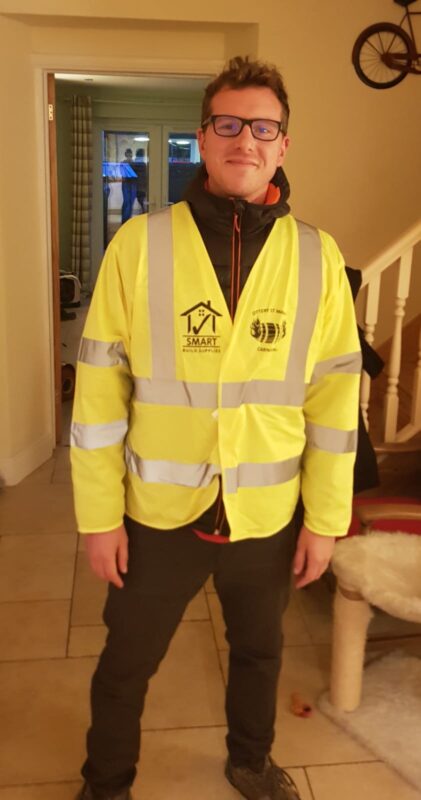
“I’m a big history fan and witnessing a unique tradition that stretches back hundreds of years is just an absolute joy.”

Guy Paddon

Treasurer & ROLLER

Q. How long have you been involved with Tar Barrels?

A. “I have been on the committee and involved with the tar barrels for just under 39 years”

Q. What is your role?

A. “After being on the committee a few years I became the assistant treasurer and then in 2019 when Joyce Lovell retired I became the treasurer. I rolled the men’s barrels for a number of years and now roll the veterans barrel.”

Q. What does the event mean to you personally?

A. “I feel privileged to be part of this event, and want to do everything I can to help ensure it continues. We have a great committee that has a wide range of abilities to complete most tasks needed.”

Q. Do you remember your first tar barrels night?

A. “I remember as a young child being taken down to watch the bonfire being lit and then to the factory to watch my father roll the first men’s barrel before being taken home”

Q. Why do you think it’s so important to keep the tradition going?

A. “It is essential for Ottery to keep this tradition going, so many traditions have stopped and it means so much to so most people in Ottery. It brings in money to many businesses and it is what Ottery is well known for.”

Q. What makes it special compared to other events?

A. “There is literally nothing like the Tar Barrels and it’s an amazing buzz around the town”

Q. How would you describe it to someone who has never been?

A. “It’s just a bunch of people who pick up a barrel coated with tar and set on fire, that run through the busy streets, just your ordinary 5th November in Ottery St Mary!”

Q. What would it mean to you if it didn’t continue in the future?

A. “It has to continue, we work tirelessly to ensure it does. Ottery would not be the same without the Barrels, and I would feel that we had let our predecessors down, including my late father who was the chairman back in the mid 70’s.”

James Williams

Roller / Volunteer

Q. How long have you been involved with Tar Barrels?

A. “27 years”

Q. What is your role?

A. “Roller / Volunteer”

Q. What does it mean to you personally?

A. “In the past, I was more involved in the behind-the-scenes work, whereas nowadays I tend to help closer to the event as time allows. Being involved gives me a tremendous sense of pride, and to be one of the privileged few people in the country who can actually take part in the event is something I will cherish for the rest of my life.”

Q. Do you remember your first Tar Barrels night?

A. “I remember being young and nervous before my first carry, standing beside my dad in the crowd. As the barrel was passed over for the first time and I set off running, I looked up and saw the flames lighting up the faces around me. Out of all the noise and excitement, the one thing that stood out was hearing my dad cheering me on.”

Q. Why do you think it’s important to keep the tradition going?

A. “This is such a unique event, with all the red tape in today’s society this event just shows traditions like this need preserving for the community.”

Q. What makes it special compared to other events?

A. “There is nothing else like it, you can’t compare it! “

Q. How would you describe it to someone who’s never been?

A. “It’s not just something you watch, it’s something you feel, the noise, the heat, the crowd, the anticipation as the barrels come through the streets, the smell of burning tar in the air, the heat of the flames on your face, and an atmosphere of excitement unlike anything else. It’s chaotic, emotional, and unforgettable”

Q. What would it mean to you if it didn’t continue in the future?

A. “It would be a very sad to see it end. Ottery St Mary Tar Barrels has survived because generations of people have given their time. Whether it’s marshalling, fundraising, putting signs out, or helping behind the scenes, every contribution plays a part in keeping this unique tradition alive for future generations.”

“Out of all the noise and excitement, the one thing that stood out was hearing my dad cheering me on.”

Toni Hiscocks

Volunteer

Q. How long have you been involved with Tar Barrels?

A. “Tar Barrels has always been part of my life and part of my family history. My granddad and his wife were involved, along with my aunts, uncles, cousins, and now my own children. Both my son and my daughter have been involved too, so although I’ve never been a barrel roller myself, I’ve been connected to Tar Barrels in one way or another for most of my life.”

Q. What does the event mean to you personally?

A. “My involvement has always been more behind the scenes. I spent some time on the committee and helped with fundraising and community events over the years – selling burgers, helping at cake stalls and lending a hand wherever needed. My daughter was Carnival Princess in 2011/2012, and that involved a huge amount of fundraising. We organised talent shows, children’s discos, cake sales and lots of other activities. Looking back, it was such a special time.”

Q. Do you remember your first tar barrels night?

A. “I remember my first Tar Barrels night very clearly. I was a child at Spencer’s Court looking down on the bonfire at st saviours and later in the evening remember huddling close to my Auntie Ruth because her husband Ivan (my mums brother) was rolling. I got a bit too close to the barrels and it frightened me! I’ve never been particularly brave around the barrels and never really saw myself as a roller, but I’ve always loved being part of everything around it.”

Q. Why do you think it’s so important to keep the tradition going?

A. “What makes Tar Barrels so special is that it’s far more than just the barrels themselves. It’s the community spirit, the camaraderie and everyone coming together to create something incredible. It brings people together in a way very few events do. The schools benefit, local charities benefit and families all play a part. It’s one of those nights where the whole town feels connected.”

Q. How would you describe it to someone who has never been?

A. “For someone who’s never experienced it before, I’d say it’s completely unique. You need to come with an open mind and do a little research because it’s not quite what people expect. People come for the excitement and the thrill of seeing burning tar barrels carried through the streets, but when you’re involved, you realise it’s about so much more than that. It’s a tradition built on generations of people giving their time and energy to keep it alive.”

Q. What would it mean to you if it didn’t continue in the future?

A. “I think it’s really important that it continues. Families before us have worked hard for years and years to keep it going. When you look back at old photographs and stories, women were rolling barrels wearing skirts and high heels – it’s quite incredible to think about now! I feel very honoured to have been involved and to have seen the dedication behind it.

I do sometimes worry about the future because it can feel like it’s often the same familiar faces doing the hard work. It would be wonderful to see more people getting involved and supporting it in different ways. Because if Tar Barrels were ever lost, it would be a real shame. Some traditions, once they’re gone, never come back. Tar Barrels isn’t just about one night; it’s about community, family, history and keeping something truly special alive for future generations.”

Alongside Tar Barrels, another tradition that has become very special to me is the Rock Cannons. I’ve been involved with this, another unique tradition for around seven or eight years now, helping to fire them throughout the day. For me, hearing the cannons first thing in the morning is when the day truly begins. Once you hear that first firing, you know Tar Barrels day is going to be something special.

The cannons are fired in the morning, again at lunchtime and then at tea time, and they mark the rhythm of the day and build that sense of excitement and togetherness. There’s a real camaraderie around it, and over the years I’ve become much more involved with that side of the traditions too. It’s another part of what makes the day so unique – all those different traditions and people coming together to create something that means so much to the community.

Andy Wade

President

Q. How long have you been involved with Tar Barrels?

A. “I joined the Carnival Committee over 50 years ago.”

Q. What is your role?

A. “I started my various roles as a Chief Marshall for our procession and then progressed through the ranks as Vice-Chairman, Chairman and to present day as the President. I also rolled the barrels for a while.”

Q. What does it mean to you personally?

A. “The Carnival and Barrels has been a large part of my life year on year. Like many others the build up to the event is something to look forward to each year and the camaraderie is second to none.”

Q. Do you remember your first Tar Barrels night?

A. “I was quite young and there was a BBC presenter doing a programme from the square and the place was awash with green vans and lots of cables everywhere. The procession was on the same night as barrels in those days and the whole affair was rougher with fireworks let off in the streets amongst the crowds.”

Q. Why do you think it’s important to keep the tradition going?

A. “As a country we are renown for our traditions, lose your traditions and you lose your identity. Tradition not only provides spectacle but creates opportunity for communities to celebrate their heritage.”

Q. What makes it special compared to other events?

A. “Festivals that are associated with fire are far fewer today but there are still a few scattered around the country, why are we special, well probably because we are the only event that carries various sized barrels on our shoulders, alight and through the streets of our town.”

Q. How would you describe it to someone who’s never been?

A. “The event starts at 5:30 in the morning with the firing of hand-held cannons. Later in the afternoon the children’s barrels start in the streets of the town and slowly progress through until the evening when the men’s and women’s barrels start. Various barrels are lit and carried through the streets until the last barrel at midnight. Over 20,000 people have been known to attend the event so it becomes very crowded.”

Q. What would it mean to you if it didn’t continue in the future?

A. “It would mean the loss of a world-famous event which celebrates over 400 years of English history. I would get over it but the community would lose far more along with a country that no longer values its heritage.”

“…lose your traditions and you lose your identity. Tradition not only provides spectacle but creates opportunity for communities to celebrate their heritage.”